Real Brands and Cars in Games: Trademark Infringement or Atmosphere
Real car brands and logos in a game: where atmosphere ends and trademark infringement begins.

You can put a real brand into a game when the object works for the atmosphere of the scene and doesn't pull players in on the strength of someone else's recognition. The moment a recognizable brand starts selling your game, you're exposed to a claim. There's no universal rule here: the outcome of a dispute depends on what protects the object, which country hears the case, and how strong each side's evidence is. Below are four court cases we lean on in our work with studios, and the practical takeaway from them.
Humvee in Call of Duty: Why the Court Dismissed the Trademark Claim
Military manufacturer AM General makes the Humvee — the HMMWV (High Mobility Multipurpose Wheeled Vehicle), a military off-roader in service with the US Army since the 1980s — and owns the rights to its name and look. The company sued Activision Blizzard because the Humvee appeared in several Call of Duty installments without permission. The claim rested on trademark infringement, false advertising, and unfair competition under the Lanham Act.
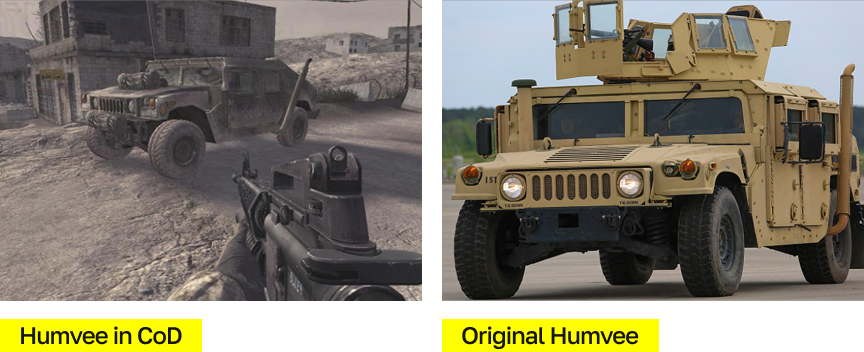
The Southern District of New York dismissed the suit on March 31, 2020. The court applied the Rogers test: artistic function outweighs the trademark when the use doesn't mislead players about the source of the game. The logic is simple. A soldier in the places and times the game depicts would have encountered exactly a Humvee; realism is Call of Duty's stated artistic goal, and the hardware serves it. Players don't think AM General made or endorsed the game.
Textron Helicopters in Battlefield 3: A Hardware Suit and a Settlement
Right next to it sits the dispute over Battlefield 3. Textron, the parent company of Bell Helicopter, spotted its own specific models in the game — the AH-1Z Viper, the UH-1Y Venom, and the V-22 Osprey tiltrotor — and sent Electronic Arts a demand. EA moved first and filed suit ahead of them, invoking fair use and the First Amendment. Textron countersued for infringement.
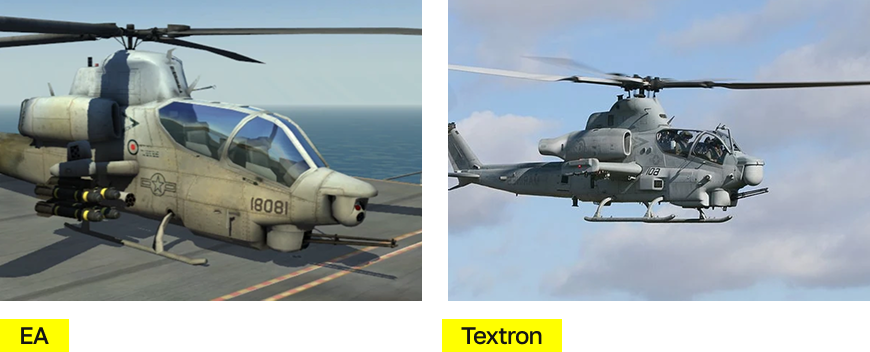
There was no final verdict in this case. In August 2013 the parties settled, the case closed, and the terms stayed private. What matters here is the difference from Humvee: Battlefield featured specific recognizable models, the parties already had a prior relationship, and the pure-atmosphere argument looked weaker.
Ferrari v. GTA: When a Reworked Car Design Doesn't Infringe the Brand
Ferrari sued the publisher of Grand Theft Auto over the Turismo car in GTA IV. The in-game vehicle resembled the Ferrari 360 Modena: get behind the wheel and it feels like a Ferrari, while the details are assembled from a reworked combination of elements. Ferrari relied on its registered design rights and the copyright in the 360 Modena design.
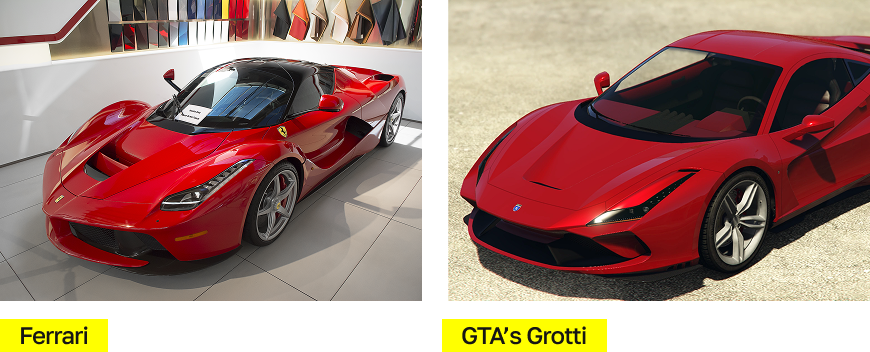
The French courts sided with the game. The Paris Court of Appeal, on January 26, 2016, held that the Turismo did not reproduce the essential features of the Ferrari 360 Modena, and that the elements Ferrari pointed to neither evoke the brand nor mislead players. The design was reworked enough to escape a likelihood of confusion. There's a significant caveat here: GTA's publisher had the resources and lawyers to sustain a years-long dispute with a carmaker. We know of private stories where studios settled with companies like these and paid, rather than taking it to court.
Blizzard v. Clones: How to Prove Character Copying in a Game
Blizzard and Valve jointly sued two mobile clones: Heroes Charge by uCool and DotA Legends by Lilith Games. The characters in these games were nearly identical to the heroes of Warcraft III and Dota — from the outside, the infringement looked obvious.
The Northern District of California saw it differently. The court dismissed the first complaint against uCool on December 8, 2015, for lack of specifics: "they copied dozens of our characters" isn't enough — the plaintiff has to show, character by character, what exactly makes each one original and how copyright protects it. Once Blizzard and Valve added a detailed comparison of specific heroes (for example, Illidan Stormrage from Warcraft), the amended complaint held up: the court denied uCool's motion to dismiss, and the dispute ended in a settlement. The lesson holds even for major rights holders: without character-by-character specifics, proving what seems like "obvious" copying stalls and drags on for years with no guaranteed result.
Where the Line of Lawful Use of Someone Else's Brand Falls
The practical takeaway is easy to state and hard to execute. Using someone else's IP for the atmosphere of a scene is something courts usually tolerate. Use that pulls your players in on the strength of another brand and is done carelessly is the risk zone. Much comes down to the particular judge and the strength of your evidence.
If you want to put a recognizable object in your game, you have three routes: rework the design so the likelihood of confusion falls away; drop the object; or reach an agreement with the rights holder. How deep the rework has to go is dictated by the type of protection:
To the question studios ask most often — "is it enough to change the car design a little?" — there's no short answer. You have to rework it either way, check design rights and territories, and set the depth of the rework by the specific object: a car's look can be protected by a registered design and a trademark at the same time.
In practice: rights holders rarely run straight to court. First comes a formal letter proposing to resolve the matter — a redesign, removal of the asset, or a license to use it.
— Futura Digital's assessment
How to Use Real Brands in Your Game Without a Lawsuit
Before you put a real brand or piece of hardware into a game, weigh the risk deliberately: what protects the object, which markets you're launching in, how often the rights holder litigates. Then you pick from the three routes — rework, drop, or agree. The "I put it in for realism" argument doesn't always help in court; what helps is preparation, specificity in the design, and care.

Discuss
the Task
Speak to our team
Speak to our team. Tell us about your task –
we’ll help you with it in any jurisdiction.