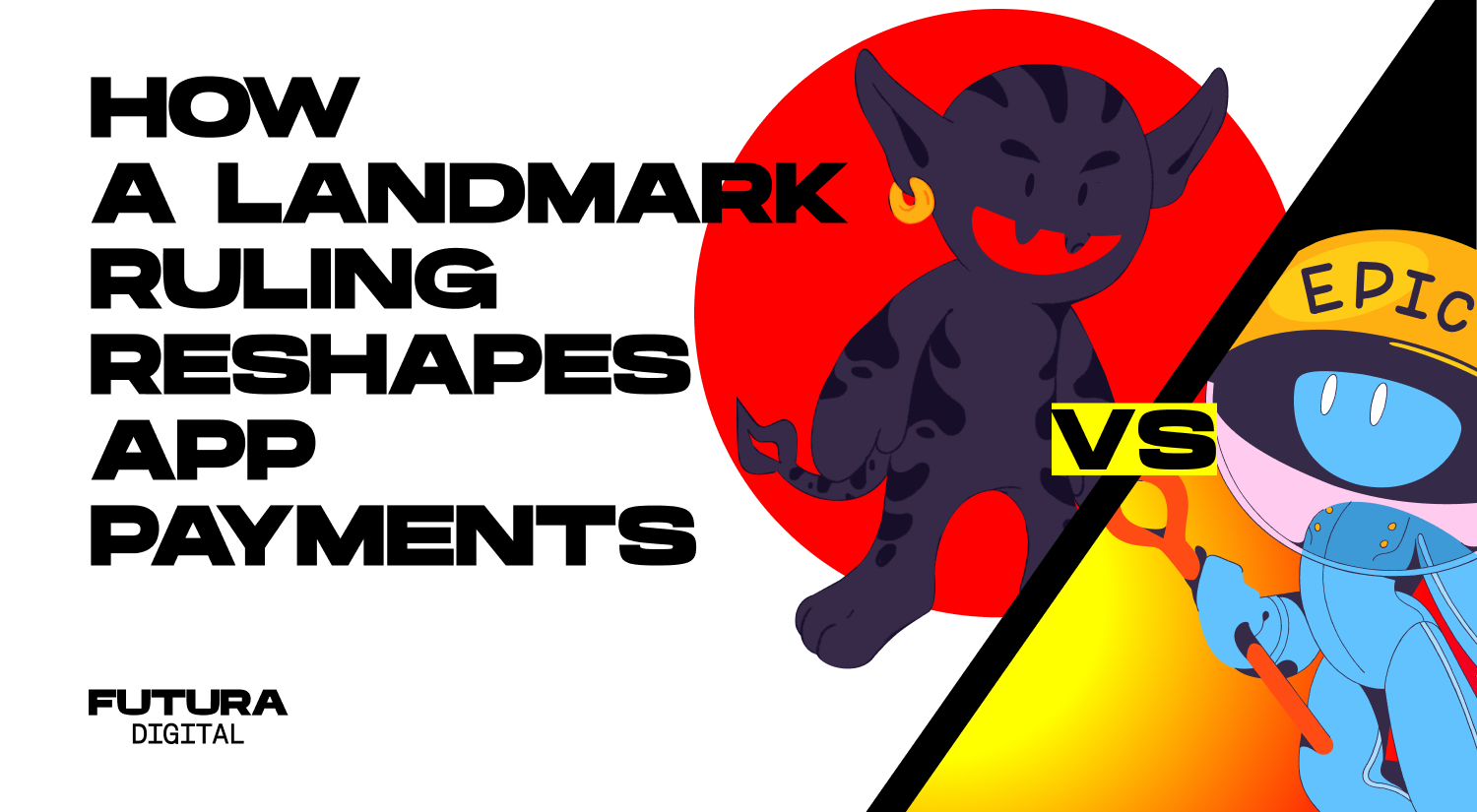
Epic Games v. Google: How a Landmark Ruling Reshapes App Payments in 2025
Epic Games v. Google reshaped app payments: the injunction, Google's Play policy changes — and the 2026 settlement that cut standard fees to 20%. Updated with what changed by July 2026.
The Context
For over a decade, developers have been constrained by strict billing systems imposed by major app stores. Both Google and Apple controlled in-app payments, charged significant fees, and limited how developers could communicate with their users.
The Epic v. Google case challenges this model head-on. By requiring Google to permit alternative billing options and external communication of prices, the ruling not only impacts U.S. law but also signals broader regulatory alignment with international frameworks like the EU Digital Markets Act (DMA).
What the 2025 Ruling Means for Developers and Global App Ecosystems
What the Court Decided
The U.S. District Court in California issued a permanent injunction compelling Google to:
- Allow developers to integrate alternative billing and payment systems within Android apps.
- Cease requiring developers to adjust pricing depending on whether Google Play Billing is used.
- Permit external links and direct communication about prices and discounts.
These obligations are effective until November 1, 2027, providing a three-year regulatory window during which developers can test new monetization strategies.
Beyond the Apple Case
The ruling follows Epic’s earlier legal battle with Apple but extends its scope significantly. Whereas Apple’s case only allowed developers to inform users about cheaper payment options, Google must now enable those systems directly within Android apps.
This represents a decisive move toward a more open digital marketplace — where platform access, not control, becomes the foundation for innovation.
Global Convergence: The EU Digital Markets Act
The Epic v. Google decision mirrors principles already embedded in the EU’s DMA, which designates major platforms like Google and Apple as “gatekeepers”. Under Articles 5 and 6 of the DMA, such companies are prohibited from blocking third-party billing systems or app-store alternatives.
Together, these legal frameworks demonstrate an emerging transatlantic alignment in regulating digital platforms and protecting developer autonomy.
Practical Takeaways
For developers and publishers, this shift opens tangible opportunities:
- Freedom of payment architecture — direct integration with providers like Stripe, Paddle, or crypto gateways.
- Transparent pricing strategies — offering discounts or alternative prices without breaching parity clauses.
- Renewed D2C potential — building direct-to-consumer relationships and reducing platform dependency.
However, compliance remains key. Google is likely to implement security and certification layers around third-party payments, citing user protection — a move developers must navigate carefully to avoid operational risks.
Conclusion
The Epic Games v. Google ruling redefines the future of app monetization and digital competition. While Google may continue its appeals, the legal and market momentum is clear: the app economy is shifting toward openness and user choice.
For developers, this is the moment to experiment, adapt, and prepare for the post-gatekeeper era. And for global businesses, it’s a reminder that digital law is now shaping innovation as much as technology itself.
The original article is available on PocketGamer.
What changed by July 2026
The appeals didn't end in a courtroom defeat — they ended in a deal. After the Supreme Court refused to pause the injunction on October 6, 2025 (compliance deadline October 22, policy live October 29), Google and Epic reached a worldwide settlement, finalized March 4, 2026, and Google's Supreme Court petition was dismissed on March 9, 2026. The economics moved further than the original ruling required: Google's standard Play Store fee falls from 30% to 20% on in-app purchases and to 10% on subscriptions, with Google Play Billing now an optional add-on of about 5%, and a 15% rate on new-install transactions for developers in Google's Apps Experience and Play Games programs. Google also introduced a Registered App Stores program so vetted third-party stores can install and update apps without the old scare screens, and Fortnite returned to the Play Store worldwide by March 19, 2026.
For a studio, this comes down to margin on the Android share of revenue: the store fee used to be a fixed line of 15–30%, and now a range opens up — third-party stores and alternative billing. We don't advise rebuilding monetization ahead of time: until the terms are approved by the court, any numbers are a forecast. What is worth doing now: calculate your Android share of revenue and how sensitive your unit economics are to the fee; build in the architectural option to switch billing or store without a rebuild; and don't sign long-term exclusives with your current payment providers.
— Gennady Kurdiumov, Co-Founder FUTURA Digital
The important caveat: the settlement is not yet approved. Judge Donato has been openly skeptical ("two mortal enemies … are suddenly BFFs") and set a summer 2026 evidentiary hearing he calls the "final act," where he will either bless the deal or keep his original October 2024 injunction (in force until November 1, 2027). Rollout of the new terms in the US, UK and EU is targeted for June 30, 2026, with other regions through 2027 — but the US go-live depends on that ruling.

Gennady Kurdiumov
Plan for it — yes; rely on it — no. The injunction is in force, but the key US terms are tied to the court's decision, and the timing may slip. We advise running the plan on two scenarios: a baseline on the current rules and a target on the new terms by 30 June 2026 — and until approval, taking no irreversible steps: don't terminate existing contracts and don't make public promises to players. In the EU and the UK the changes may take effect earlier, so if a meaningful share of your revenue sits there, it makes sense to prepare from those markets first.
Discuss
the Task
Speak to our team
Speak to our team. Tell us about your task –
we’ll help you with it in any jurisdiction.